| Home |
|
|
|
|
|
![]() |
||
|
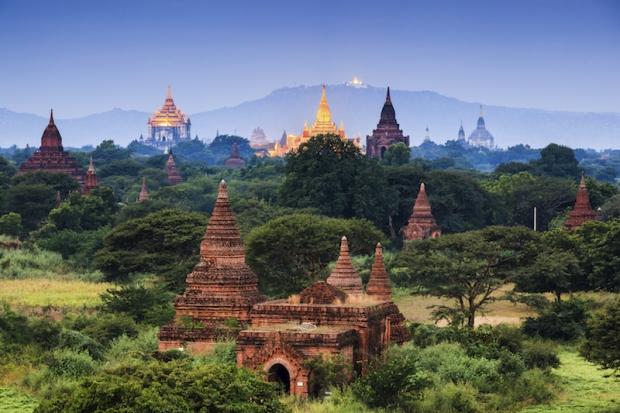
Historical Background Myanmar history dates back to the early 11th Century when King Anawrahta unified the country and founded the First Myanmar Empire in Bagan more than 20 years before the Norman Conquest of England in 1066. The Bagan Empire encompassed the areas of the present day Myanmar and the entire Menam Valley in Thailand and lasted two centuries. The Second Myanmar Empire was founded in mid 16th Century by king Bayinnaung. King Alaungpaya founded the last Myanmar Dynasty in 1751 and it was during the zenith of this Empire that the British moved into Myanmar. Like India, Myanmar became a British colony but only after three Anglo-Myanmar Wars in 1825, 1852 and 1885. During the Second World War, Myanmar was occupied by the Japanese and had become the independent state since 4th January 1948 after 62 years under the colonial administration. It is remarkable to note that Myanmar is the country that regained her independence first through she was the last country occupied by the British in this region. |
||
|
|
||
|
Geography - Myanmar has total area of 676,577 sq. km, it is twice the size of Vietnam and about the size of United Kingdom and France combined. Geographically, Myanmar is the largest country in South-East Asian Peninsula sharing borders with Bangladesh, India, China, Laos and Thailand |
||
|
|
||
|
Climate - Myanmar enjoy a tropical climate with three distinct seasons. The best time to visit is from October to February. The dry season runs from mid-February to mid-May, when the humidity builds up before the rains begin. The rainy season comes with the southwest monsoon, which runs from mid-May to mid-October. Temperature varies from 38 C to 19 C, humidity from 82.8 % to 66 % |
||
|
|
||
|
Nationality - There are altogether 135 groups of nationalities in Myanmar, which have been coexisting with one another for long: Kachin, Kaya, Kayin, Chin, Bhamar, Mon, Rakhine and Shan are regarded as the major groups. Among them, Bhamar is the majority: 69% of the total population of 47 million |
||
|
|
||
|
Language - Every group of nationally speaks its own language or dialect. But the official language is Myanmar, which is spoken all over the country. English is also widely spoken and understood especially in the cities like Yangon, Mandalay, Bagan and so on |
||
|
|
||
|
Religion - Buddhism is the faith of the majority. In fact, 80 % of the people profess Buddhism. However, there is full freedom of worship for followers of other religions, Thus, we find Christians, Muslims, Hindus and even animists, living together peacefully in Myanmar.
Myanmar lies on crossroads of two of the worlds great civilizations China and India. Its culture is a blend of both interspersed with Myanmar native traits and characteristics. Buddhism has great influence on daily life of the Myanmar. The people have preserved the traditions of close family ties, respect for the elders, reverence for Buddhism and simple native dress. Myanmars are known for their simple hospitality and friendliness. |
||
|
|
||
|
Currency The local currency is the kyat (pronounced chat), which is divided into 100 pyas. Kyat notes are issued in denominations of 1,5,10,15,20,45,50,90,100,200, 500 and 1000. As there are strict Foreign Exchange Control Regulations, visitors are advised to change their foreign currencies only at authorized moneychangers in banks, airport and hotels. |
||
|
|
||
|
Foreign Exchange Certificates All arrivals except package tour and business visa holders are expected to exchange US$ 200 for Foreign Exchange Certificates (F.E.C), which are equivalent to US$. The certificates, which are in US$ 1, US$ 5, US$ 10 and US$ 20 denominations, are accepted by hotels, tourist restaurants and as payment of admission fees at museum and pagoda. US$ are accepted in lieu of FEC. Travelers cheques exchanged in banks are given in FEC equivalent. Only amounts exchanged beyond the initial US$ 200 may be reconverted to US dollars upon departure at the airport |
||
|
|
||
|
Business Hours Banks are open Monday to Friday from 10 AM to 2 PM and Government offices on weekdays only from 9:30 AM to 4:30 PM. Shops are generally open longer but their hours vary |
||
|
|
||
|
Entry Requirements Four weeks visas are obtainable for a fee at Myanmar foreign missions. Three photos are required. Visa on arrival with pre-arrangement of local tour operators is available currently |
||
|
|
||
|
Airport Departure Tax US$ 10 |
||
|
|
||
|
Reconfirmation Visitors are advised to reconfirm international flights before going upcountry. |
||
|
|
||
|
Customs At the port of entry, all foreign currencies, jewellery, electrical and electronic articles and cameras must be declared to a customs officer. Export of antiques and archaeological objects is prohibited |
||
|
|
||
|
Sight-seeing Entrance fees are collected at well-known pagodas, temples, monasteries, museums, palaces, and archaeological sites. The ticket office is at the entrance |
||
|
|
||
|
Shopping You are advised to buy gems, jewellery and silverware at the Myanmar Gems shop and other authorized shops, where you will be given a voucher with a permit for export. Ignore touts who may offer guide services, foreign currency exchange or gems of a doubtful nature. |
||
|
|
||
|
Duty Free Shopping There are duty free shops in the airport arrival and departure lounges. The duty free allowance is two bottles of liquor, two cartons of cigarette, 100 cigars and half a liter of perfume |
||
Web Developer: Myanmars.NET, Yangon, Myanmar.
© Copyright 2000-2006 by Golden Express Tours.